Table of Contents
An ERV (energy recovery ventilator) continuously swaps stale indoor air for fresh outdoor air while recovering heat from the exchange, so fresh air does not carry the full cost of conditioning raw outside air. In a tight Triangle home, it clears out the CO2, VOCs, and odors that build up with the windows closed. Installed, it typically runs an estimated $5,000–$7,000.
The 30-second test: if bedrooms feel stuffy by morning and a CO2 monitor reads over 1,000 ppm overnight, your house is not getting enough fresh air.
What Is an ERV, and Why Raleigh Homeowners Are Asking
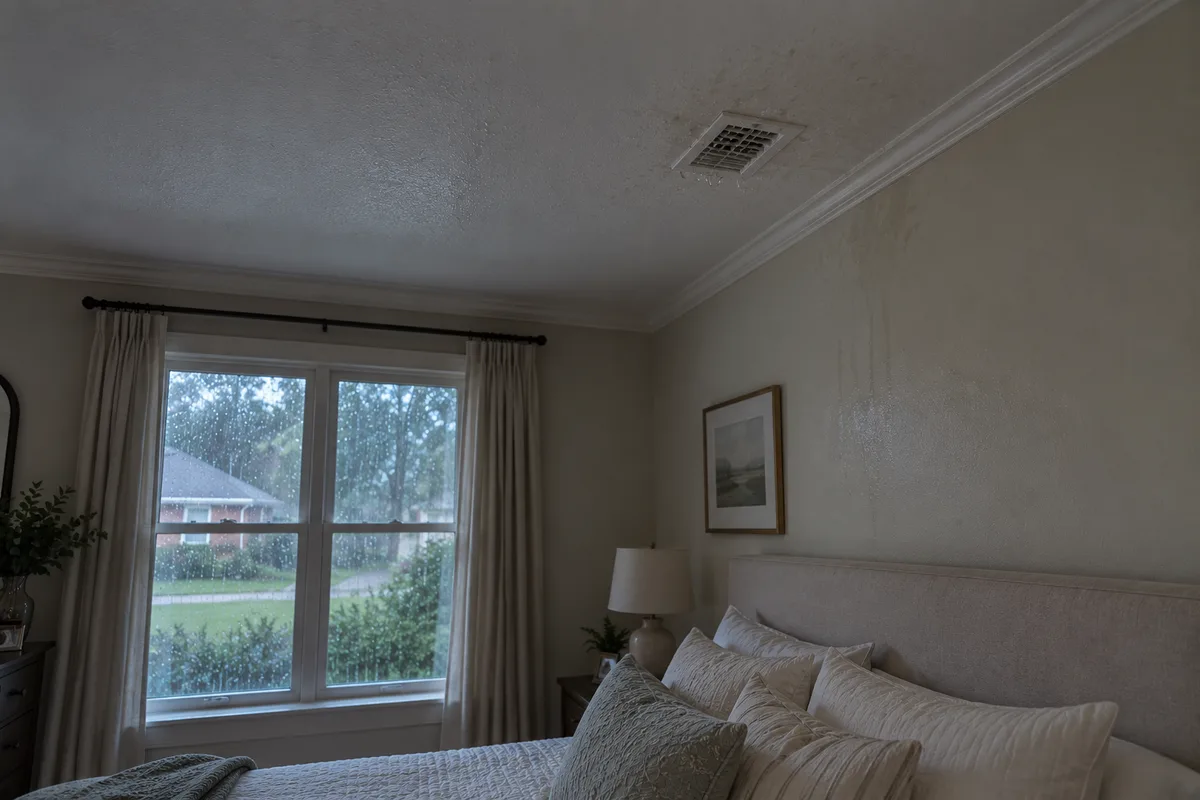
By July in the Triangle, most homes have run the AC with the windows shut for two months straight, and they will keep them shut through September. That keeps the heat and humidity out. It also means the same indoor air recirculates through a sealed house for months, collecting carbon dioxide, cooking odors, and whatever building materials are off-gassing. An ERV is the system that fixes that without letting summer back in.
An ERV, or energy recovery ventilator, is a whole-house ventilation system that continuously exchanges stale indoor air for fresh outdoor air, while transferring heat and moisture between the outgoing and incoming airstreams. The short version: it gives your house a steady supply of fresh air without the full heat penalty of conditioning raw July air. It pulls a little of the moisture out of the incoming stream too, though in our climate that effect is modest.
Triangle Dehumidifiers, LLC in Holly Springs, NC installs ERVs, whole-house dehumidifiers, and filtration for Wake County homeowners who want cleaner, fresher indoor air. This post explains what an ERV actually does, how it differs from an HRV and from a dehumidifier, and how to tell whether your home needs one.
How an ERV Actually Works
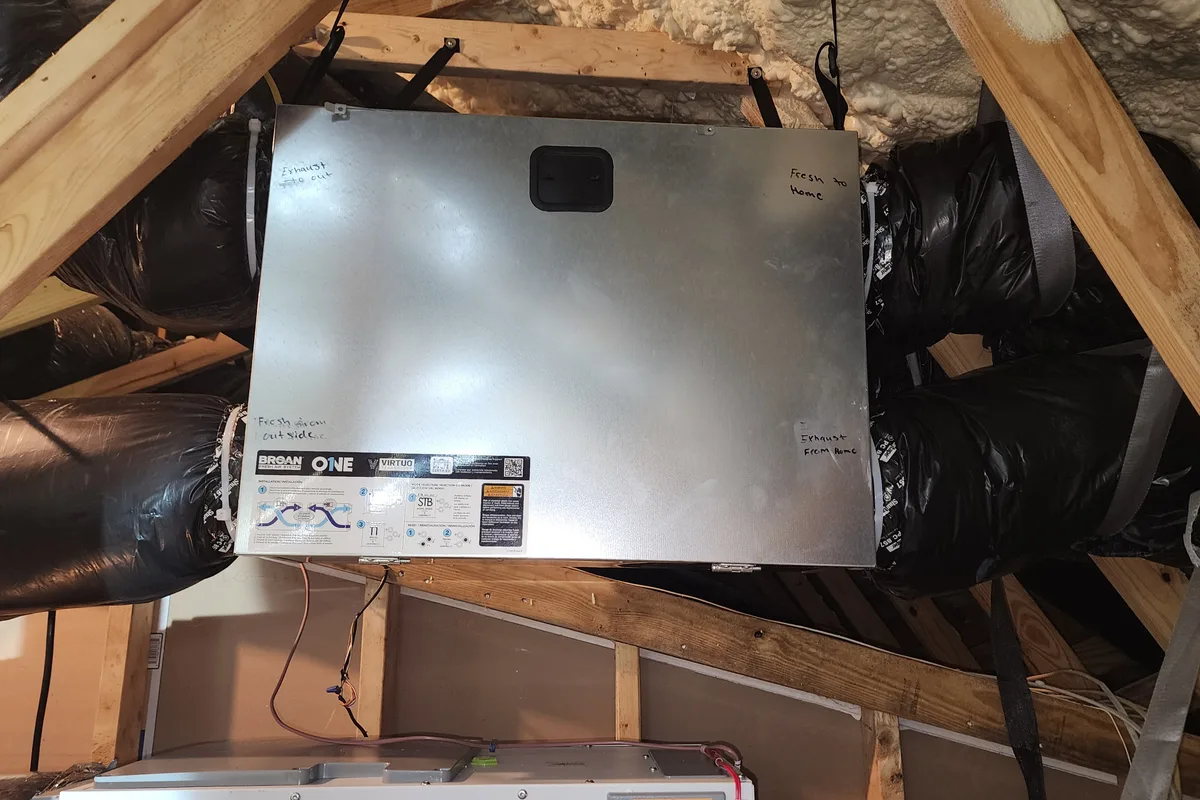
An ERV runs two airflows past each other at the same time. One stream pulls stale air out of the house and sends it outside. The other pulls fresh air in from outdoors and delivers it to the living space. The two streams never mix. They pass through a component called an enthalpy core, where heat and moisture transfer from one stream to the other through the core’s walls.
That transfer is the whole point. In summer, the cool, drier air leaving the house pre-cools the hot, humid air coming in and pulls a modest amount of the moisture out of it, so the fresh air arrives closer to indoor conditions than raw outside air would. In winter, the warm outgoing air preheats the cold incoming air. You get ventilation without paying the full heating or cooling penalty to condition raw outdoor air.
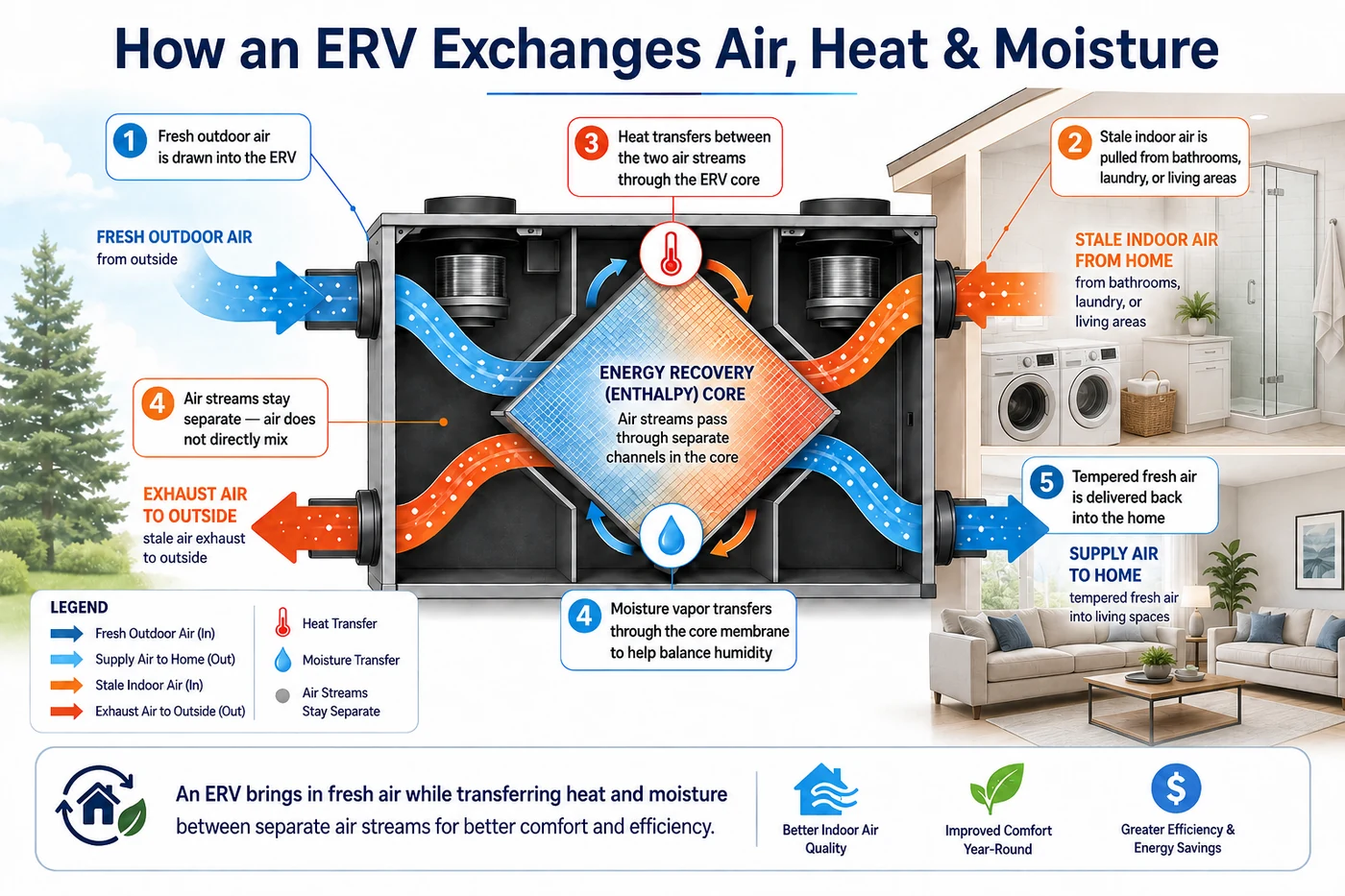
Because the two streams move at the same rate, an ERV keeps the pressure inside the house neutral. It is not pushing the house positive or pulling it negative, which matters in a home with a crawl space, where negative pressure can pull damp, musty air up from below.
What an ERV Actually Clears Out of Your Air
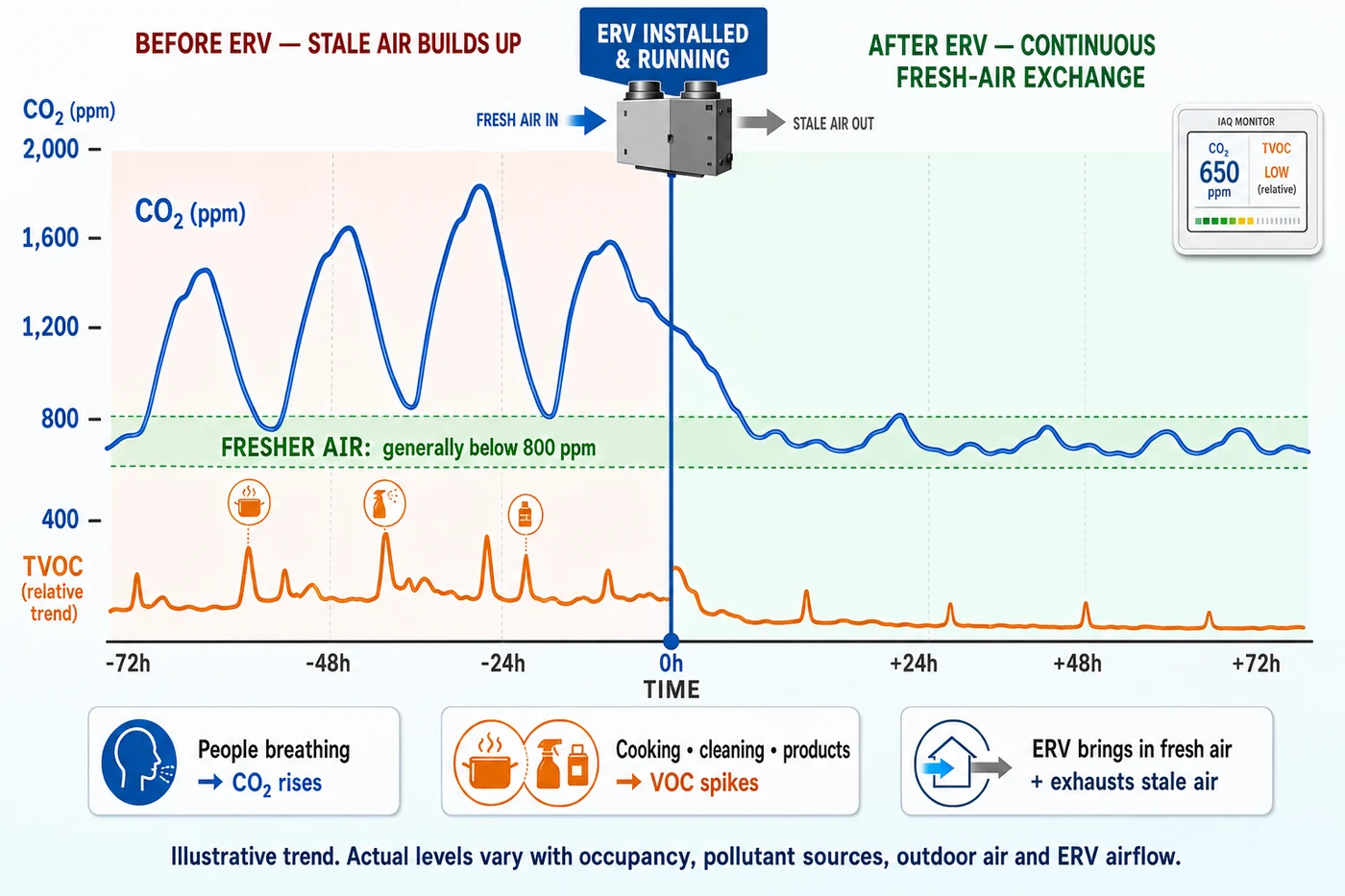
Most people don’t go looking for an ERV because they read about ventilation rates. They go looking because the house feels stuffy, the bedroom is stale by morning, or that new-construction smell never quite went away. Behind all of it is the same thing: with the windows shut, the gases and vapors your household produces have nowhere to go, so they build up. An ERV is the system that carries them back out and replaces them with fresh air. Here is what it actually dilutes:
- Carbon dioxide (CO2). You exhale it around the clock, and in a closed bedroom it climbs all night. Tightly built Triangle homes routinely run past 1,000 ppm in occupied bedrooms by morning, enough to leave you groggy and sleeping poorly. An ERV runs continuously, so it keeps diluting CO2 with outside air even while the house is shut up. This is the single most common reason Wake County homeowners end up calling about ventilation.
- VOCs and formaldehyde. Flooring, cabinets, paint, adhesives, and new furniture off-gas volatile organic compounds, and formaldehyde is one of the most common. It is heaviest in the first few years after a home or remodel is built, and NC’s heat and humidity speed the release up. An ERV dilutes those vapors as they are emitted instead of letting them accumulate, and pairing it with humidity control at 45 to 50% RH slows the off-gassing in the first place.
- Cooking gases and everyday odors. A gas range, the oven, pets, and daily cooking all put combustion byproducts and smells into the air that a closed house just holds onto. Balanced ventilation clears them out steadily, without the humidity hit of cracking a window in July.
An ERV is not a cure-all, and it is worth being straight about the limits. It dilutes gases and vapors, but it does not filter fine particles on its own, that is a job for a higher-MERV whole-house filter, and it is not a radon system, elevated radon needs testing and mitigation. For the full rundown of every pollutant in a Triangle home and how each one is handled, see our indoor air quality guide for NC homes.
You will see two similar systems when you start looking: the ERV and the HRV. The difference is simple, and in our climate it is the deciding factor.
An HRV, or heat recovery ventilator, transfers only heat between the airstreams. An ERV transfers heat and moisture. In a dry northern climate, an HRV is often the right call. In the humid Southeast, you want whatever moisture transfer you can get, but be clear-eyed about the size of it: an ERV takes a little of the humidity out of the incoming summer air, not most of it. An HRV takes none. Between the two, the ERV is the right fit here, as long as nobody is counting on it to manage indoor humidity. That is a dehumidifier’s job.
For most Triangle homes, an ERV is the better fit for that reason. The right choice still depends on the specific home and HVAC setup, which is part of what an evaluation sorts out.
Here is how the three systems homeowners compare most often stack up:
| ERV | HRV | Whole-House Dehumidifier | |
|---|---|---|---|
| What it does | Fresh air in, stale air out, recovering heat and moisture | Fresh air in, stale air out, recovering heat only | Removes moisture from the air your HVAC circulates |
| NC summer humidity | Takes a little moisture out of incoming air – not most of it | Takes none out – wrong fit for the Southeast | Actively holds the house at 45–50% RH |
| What it solves | Stuffy rooms, CO2, VOCs, lingering odors | The same, but in dry climates | Muggy feel, mold risk, dust mites |
| Typical installed cost | est. $5,000–$7,000 | Not recommended here | est. $4,500–$5,500 |
An ERV Is Not a Dehumidifier
This is the point where honest gets you further than hype. An ERV brings in less moisture than an open window or a plain intake fan would, but only somewhat less, and it does not control your home’s relative humidity. It is a ventilator, not a dehumidifier.
In a Triangle summer, an ERV and a dehumidifier do two different jobs, and most homes here need both. The ERV handles fresh air. A whole-house dehumidifier holds indoor humidity at a steady 45–50% RH, the range where mold cannot establish and the air actually feels comfortable. Run ventilation without humidity control in July and you can push indoor RH the wrong way. That is why we design the two together rather than selling an ERV as a moisture fix it was never built to be.
If the muggy, sticky feeling is your main complaint, ventilation is not the first answer. Our post on why your house feels muggy even with the AC running walks through what actually drives that.
Not sure whether your home needs fresh air, humidity control, or both? We will check your CO2 and humidity numbers in person and give you a straight answer – no pressure either way.
Does Your Raleigh Home Need an ERV?
The honest answer depends on how tight your house is and what you are noticing. An ERV earns its keep in a sealed, well-built home. It is not the first move for every house.
Lean toward an ERV if you recognize a few of these:
- Your home was built in the last 10–15 years, especially in Holly Springs, Fuquay-Varina, Apex, or western Wake County, where newer construction is noticeably tighter.
- Bedrooms feel stuffy or stale by morning, and sleep is worse with the door closed.
- Cooking, pet, or musty odors linger longer than they used to.
- You have added insulation, new windows, or air sealing, and the air feels closer since.
- You are already planning whole-house dehumidification and want fresh air handled at the same time.
- You, or someone at home, deal with unexplained tiredness, afternoon brain fog, headaches, or trouble concentrating that eases when you leave the house.
Those last symptoms are the ones people search for without realizing the air could be behind them. Elevated CO2 from too little fresh air is a well-documented cause of drowsiness, brain fog, and trouble concentrating, and VOCs off-gassing from new floors, cabinets, and furniture can add headaches and irritation on top of it. This is not a medical diagnosis, and an ERV is not a cure-all, but when how you feel tracks with time spent in a closed-up house, poor ventilation is worth ruling out. A CO2 monitor in the bedroom overnight is a cheap way to see whether that is the problem.
An ERV is probably not your first step if the house is genuinely old and drafty, or if you have standing crawl space moisture and mold. In those cases the money goes further on air sealing, a crawl space dehumidifier, or moisture control first. Ventilating a house that is already leaking air, or pulling from a damp crawl space, does not fix the root problem. For the full picture of what drives indoor air quality in NC homes, see our indoor air quality guide.
What ERV Installation Involves
A good ERV install is mostly about getting the airflow and the ducting right, not just hanging a box on the wall. Triangle Dehumidifiers sizes the fresh-air rate to ASHRAE Standard 62.2, which sets the minimum ventilation a home needs based on its square footage and number of occupants. Undersize it and the house stays stuffy. Oversize it and you are conditioning more outdoor air than you need to.
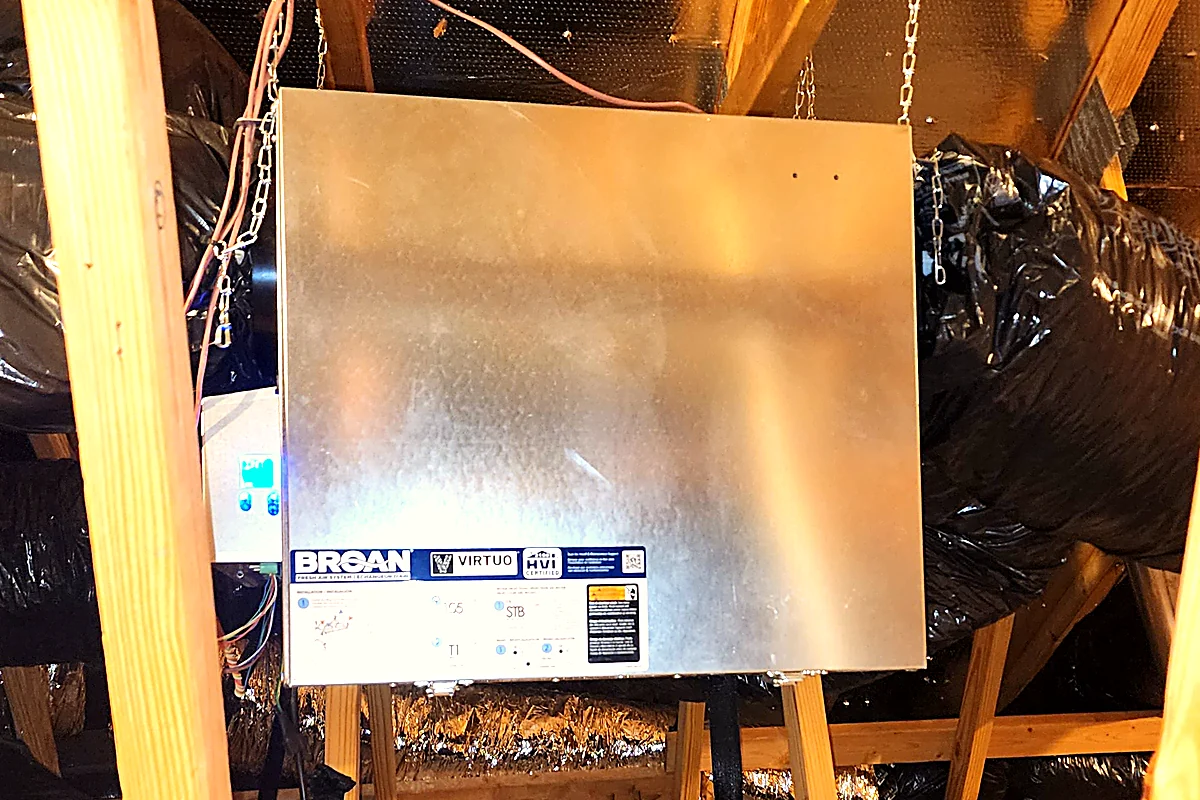
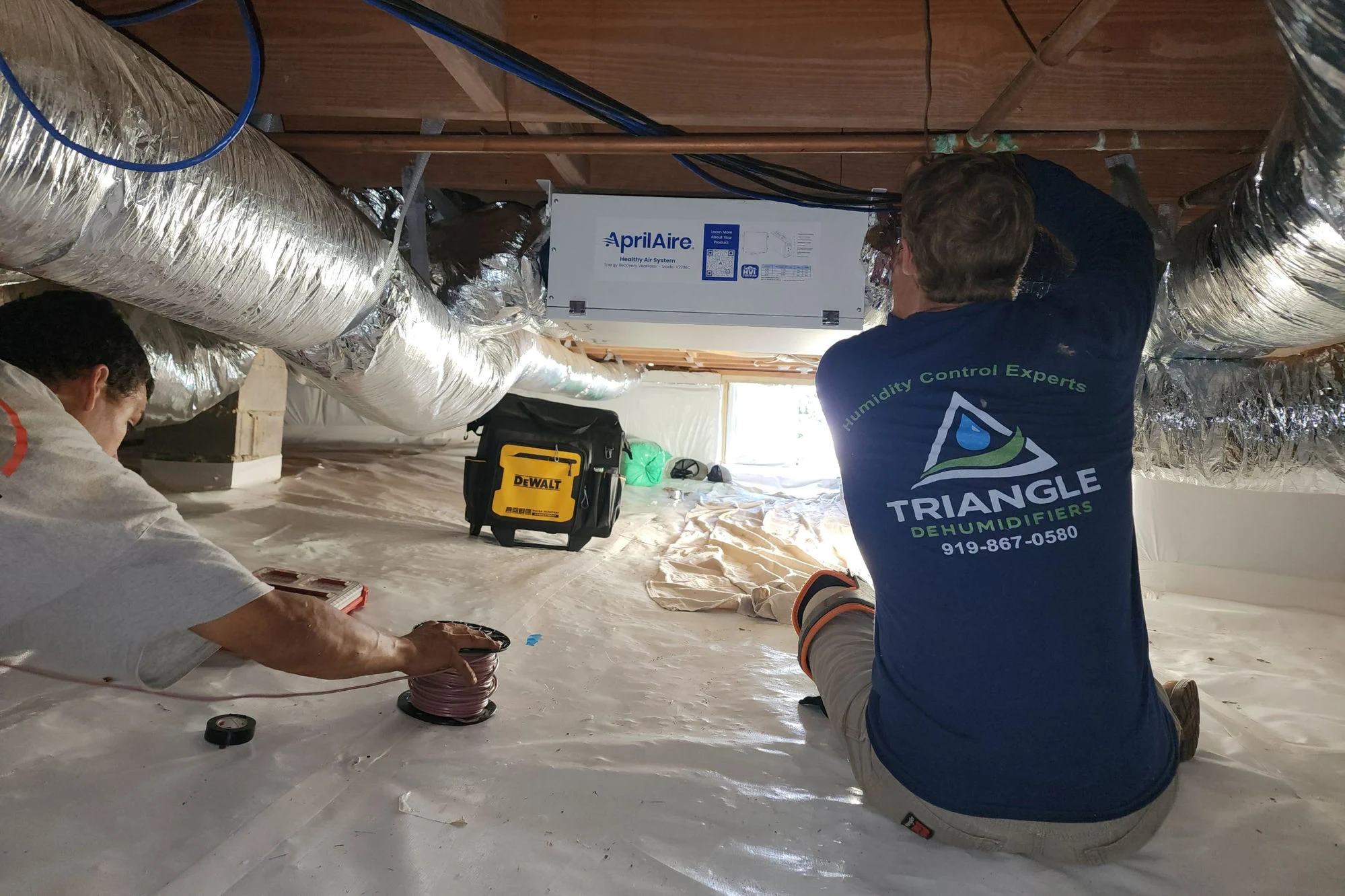
From there, the work is planning the intake and exhaust duct routes so the two do not short-circuit, deciding whether to tie into the existing forced-air system or run dedicated ducting, and commissioning the unit so the airflow is actually balanced when the crew leaves. TD installs AprilAire and Broan ERVs, chosen to fit the home’s ductwork and size.
ERV installation in the Triangle typically runs an estimated $5,000–$7,000, depending on unit selection, duct accessibility, and whether it ties into your existing HVAC or runs on its own ducting. An in-person evaluation is the only way to get an accurate number for your home.
See our ERV installation service →
Frequently Asked Questions
What does ERV stand for?
ERV stands for energy recovery ventilator. It is a whole-house ventilation system that continuously swaps stale indoor air for fresh outdoor air while transferring heat and a modest amount of moisture between the two airstreams, so the fresh air arrives tempered instead of raw. It is not a humidity-control device.
Does an ERV reduce CO2 in your home?
Yes. An ERV runs continuously, exhausting stale indoor air and bringing in fresh outdoor air, which dilutes the CO2 that builds up when a house is closed. In tightly built Triangle homes, CO2 often climbs past 1,000 ppm in bedrooms overnight, and continuous ERV ventilation is the most effective way to keep it down. It is the most common reason homeowners here ask about ventilation.
Does an ERV remove VOCs and formaldehyde?
An ERV dilutes VOCs and formaldehyde by continuously replacing indoor air with fresh outdoor air, rather than filtering them out. Since these compounds off-gas from flooring, cabinets, paint, and furniture, especially in the first few years of a new home, steady fresh-air exchange keeps their concentrations down. Holding indoor humidity at 45 to 50% also slows how fast they release.
Is an ERV worth it in North Carolina?
For a tightly built home, usually yes. Homes built in Wake County since roughly 2010 are sealed tightly enough that CO2, VOCs, and odors accumulate indoors with the windows closed from May through September. An ERV supplies controlled fresh air year-round, recovering heat and a small amount of moisture in the exchange, so ventilating adds less humidity load than an open window would. It does not control indoor humidity on its own, which is why many Triangle homes pair one with a whole-house dehumidifier. In an older, leaky home, air sealing and moisture control usually come first.
Can I add an ERV to my existing HVAC system?
In most cases, yes. An ERV can tie into an existing forced-air system or run on its own dedicated ducting, depending on the layout of your home and where the air handler sits. Triangle Dehumidifiers evaluates the ductwork and HVAC configuration during an in-person assessment and recommends the approach that fits the house.
Does an older, drafty home need an ERV?
A leaky older home already gets accidental air exchange through gaps and cracks, but that air is untempered and unfiltered. It brings in humidity and pollen on its own schedule, not yours. In a genuinely drafty home, air sealing and humidity control are usually the first priorities. Once a home is tightened up, an ERV fills the ventilation gap that tightening creates.
How is an ERV different from a bathroom or attic exhaust fan?
An exhaust fan only pushes air out. That air has to be replaced by outdoor air leaking in wherever it can, untempered and unfiltered. An ERV is balanced: it exhausts stale air and supplies an equal amount of fresh air at the same time, running it through a core that recovers heat and moisture first. It ventilates the whole house on purpose instead of one room at a time.
Where is an ERV installed in a home?
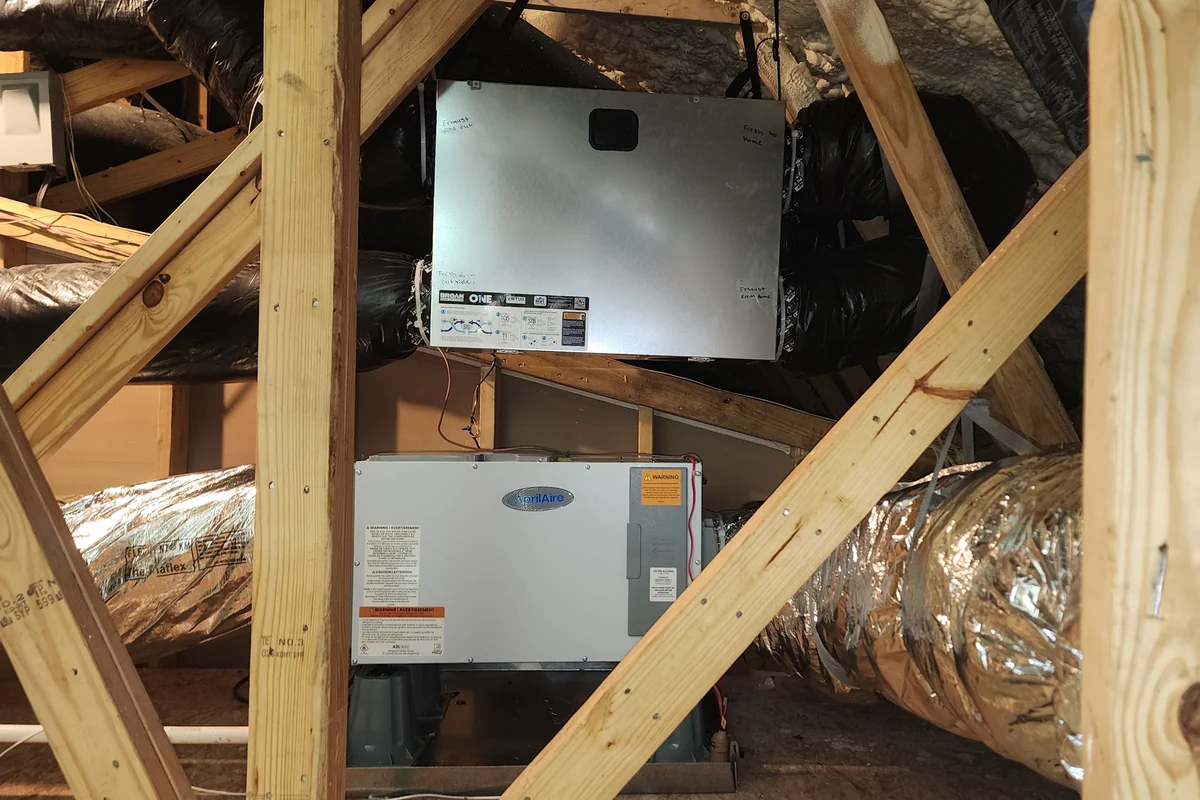
An ERV is typically mounted near the air handler, in a mechanical closet, attic, or crawl space, with two duct runs to the outside for fresh-air intake and stale-air exhaust. In many Triangle homes it is installed in the crawl space or attic and tied into the existing forced-air system. The right location depends on duct routing and access.
Thinking About Fresh-Air Ventilation for Your Home?
An ERV is worth considering if your home feels stuffy, holds odors, or was built tight in the last decade or so. The right setup depends on your ductwork, your HVAC, and how you want to handle humidity alongside fresh air.
Triangle Dehumidifiers, LLC is a crawl space dehumidifier and moisture control company in Holly Springs, NC, serving Wake County and the broader Triangle region. We size ventilation to your home, pair it with humidity control when it makes sense, and install it to work with your existing HVAC.
Call or text us at (919) 867-0580 — or request a fresh-air and humidity evaluation online. We serve Raleigh, Cary, Apex, Holly Springs, Fuquay-Varina, Garner, Wake Forest, Knightdale, Morrisville, Durham, and Chapel Hill.