Table of Contents
Why Triangle Crawl Spaces Hit Peak Moisture Every Summer
By mid-May in the Triangle, outdoor dew points are already climbing into the mid-60s°F. If your home has a vented crawl space, that warm humid air is flowing in through your foundation vents every day, and the crawl space has no reliable way to push it back out.
The result is crawl space relative humidity of 70–85% from May through September, even in homes where the living areas feel comfortable. Mold can establish on wood framing within a few weeks of sustained humidity above 60% RH. Floor joists don’t have to look wet for damage to be happening.
This post explains the specific mechanism behind summer crawl space moisture in the Triangle and what it takes to bring humidity back under control.
What Actually Happens Inside a Vented Crawl Space in Summer
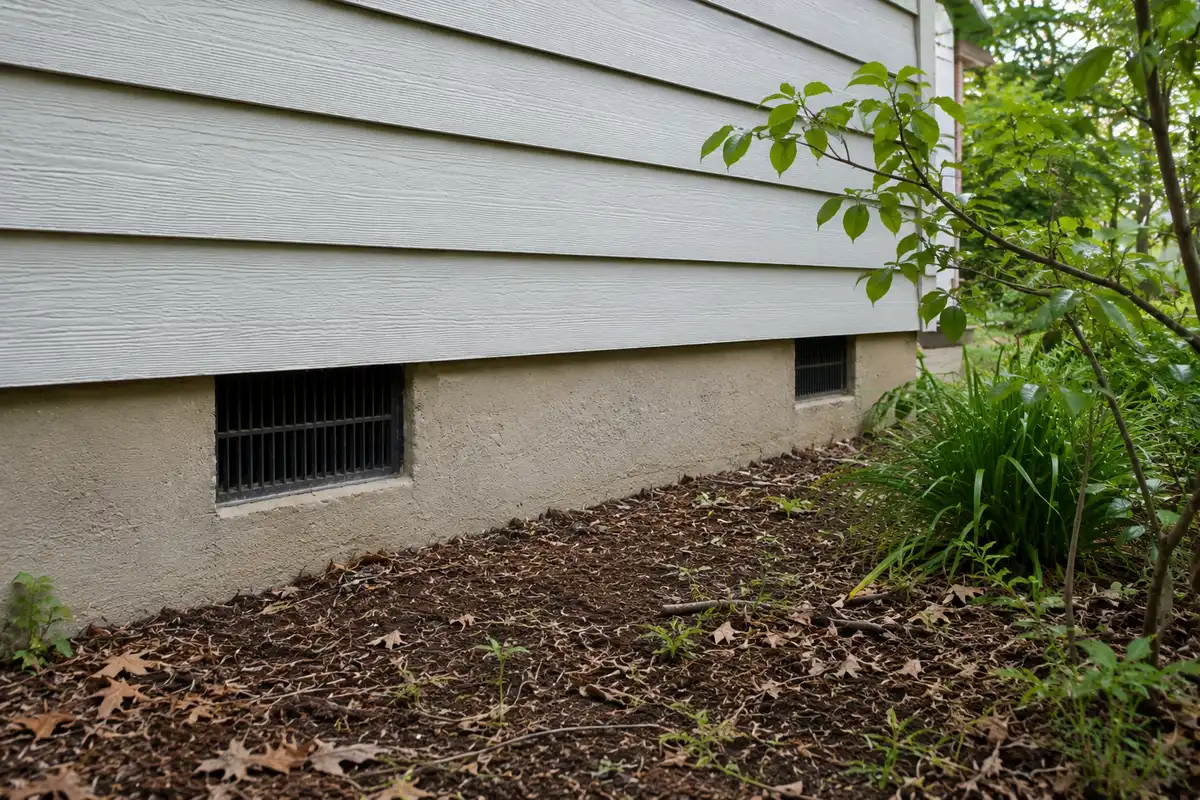
The logic behind crawl space vents was reasonable for dry climates: bring in outdoor air, let it carry moisture out, repeat. In North Carolina’s climate, that logic reverses.
On a typical July morning in Raleigh, outdoor air runs around 83°F at 78% relative humidity (a dew point near 75°F). When that air flows through your foundation vents into the crawl space, it contacts surfaces that are significantly cooler: concrete block, soil, the underside of your subfloor. The air temperature drops. And as air cools, its capacity to hold moisture drops with it.
The result is condensation. Relative humidity inside the crawl space spikes, often above the outdoor level, and visible moisture forms on cold surfaces. You’re not ventilating moisture out. You’re introducing warm air that the crawl space converts into condensation as it cools.
Opening vents in summer makes the moisture problem worse, not better. This is an established building science finding and is why North Carolina’s current code requires mechanical drying capability in sealed crawl spaces.
The Stack Effect Keeps Pulling Humid Air In
A less obvious driver is the stack effect: the tendency of air to move upward through a home the way heat rises in a chimney.
In summer, your living space is cooler than the outdoor air (your AC is running). This temperature difference creates a mild pressure gradient: slightly positive at the top of the house, slightly negative at lower levels. That low pressure at grade draws outdoor air inward through every opening, including your crawl space foundation vents.
The vents aren’t just passively open. The stack effect actively pulls warm, humid outdoor air through them throughout the day. The crawl space doesn’t reach a steady state; it’s continuously refreshed with some of the hottest, most moisture-laden air of the day.
Clay Soil Adds a Second Moisture Source Below
Foundation vents are one moisture pathway. The soil beneath your crawl space is another, and it runs all summer regardless of what’s happening above.
Most Wake County and Triangle-area homes sit on Piedmont red clay. Clay retains significantly more water than sandy or loamy soils. After a rain (the Triangle averages about 46 inches per year), the clay beneath your crawl space holds that moisture against your footings for days, sometimes longer. Ground moisture doesn’t stay put. Water vapor migrates upward continuously through exposed soil, regardless of conditions above ground.
Even during a dry week in July, the clay is still releasing moisture into your crawl space air. A vapor barrier (ground cover) reduces this substantially but doesn’t eliminate it; active dehumidification is still required to hold the 45–55% RH target year-round.
Together, the vent pathway and the ground pathway mean your crawl space is taking in moisture from two directions simultaneously through every summer month.
What 75% RH in Your Crawl Space Actually Does
Mold requires three things to grow: a food source (wood framing), temperatures above roughly 40°F, and sustained relative humidity above about 60% RH. Your crawl space provides all three from May through September.
At 75% RH, a common summer measurement in untreated vented crawl spaces in the Triangle, mold can establish on floor joists and rim boards within a few weeks. You won’t see it from inside your home. The crawl space has to be inspected directly to find it early.
The moisture also moves upward. Wood is hygroscopic: floor joists, the subfloor, and eventually hardwood floors above absorb moisture from the surrounding air. This causes seasonal swelling and cupping, the kind of floor movement that many Raleigh homeowners assume is just how wood floors behave in the South. It isn’t inevitable. It’s a symptom of uncontrolled crawl space humidity.
For more on what these symptoms look like from inside your home, see signs your home has a humidity problem.
How to Get Crawl Space Humidity Under Control
The fix has three components. The right approach depends on your crawl space’s current condition and what’s already in place.
Close the foundation vents. This cuts off the primary summer moisture pathway. Vents can be sealed with foam vent covers or rigid insulation cut to fit. This alone won’t solve the problem (ground vapor still rises and moisture already inside keeps accumulating), but sealing the vents is the necessary first step before anything else makes sense.
Add or improve the vapor barrier. A reinforced liner covering 100% of the crawl space floor reduces ground vapor significantly. Many homeowners in the Triangle have an old or partial vapor barrier that’s no longer doing its job. A properly installed ground cover added alongside a dehumidifier speeds the initial dry-down considerably.
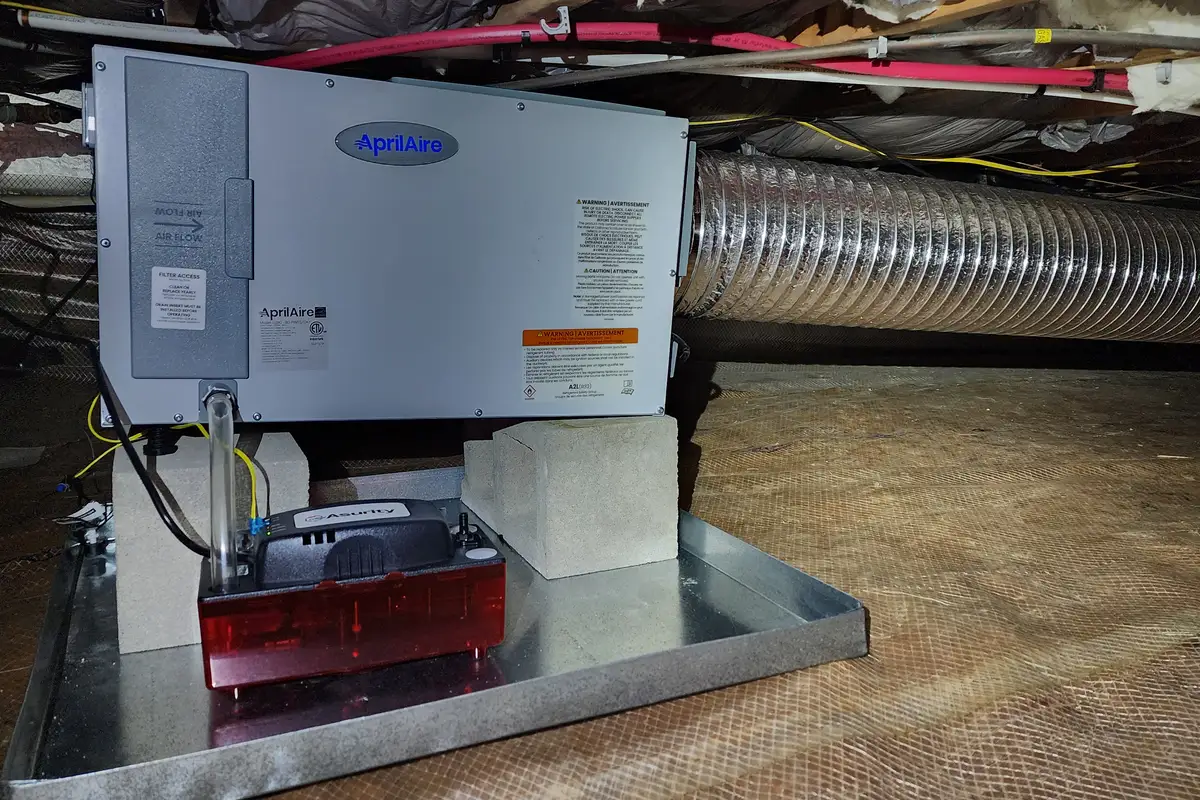
Install a properly sized crawl space dehumidifier. This is the active control mechanism. A crawl space dehumidifier removes moisture from the crawl space air continuously, holding the 45–55% RH target even during the worst weeks of a Triangle summer. Sizing is critical: a unit too small for the space runs constantly and can’t keep up; a unit sized to the actual crawl space dimensions runs normal cycles and holds the target without straining.
Triangle Dehumidifiers, LLC installs AprilAire Wi-Fi dehumidifiers (the E80W at 80 pints/day, E100W at 100 pints/day, and E130W at 130 pints/day), sized to your specific crawl space during an on-site inspection. Installed cost for a vented crawl space in the Triangle typically runs an estimated $3,000–$5,000, depending on crawl space size, access, and whether a condensate pump line needs to be extended; see dehumidifier cost in Raleigh, NC for a full pricing breakdown.
For homes where the living areas also run humid even after the crawl space is controlled, a whole-house dehumidifier may be needed as a second stage. See crawl space encapsulation vs. dehumidifier for more on when encapsulation fits into the picture.
Warning Signs to Watch For
These typically appear from May onward in homes with uncontrolled crawl space humidity:
- Musty smell when the AC kicks on for the first time in spring or early summer
- Condensation on cold water pipes, ductwork, or an existing vapor barrier
- Hardwood floors cupping, swelling, or showing gaps between boards
- Indoor humidity reading above 55% RH on a hygrometer, even with the AC running
- Visible mold or white mineral deposits (efflorescence) on foundation block walls
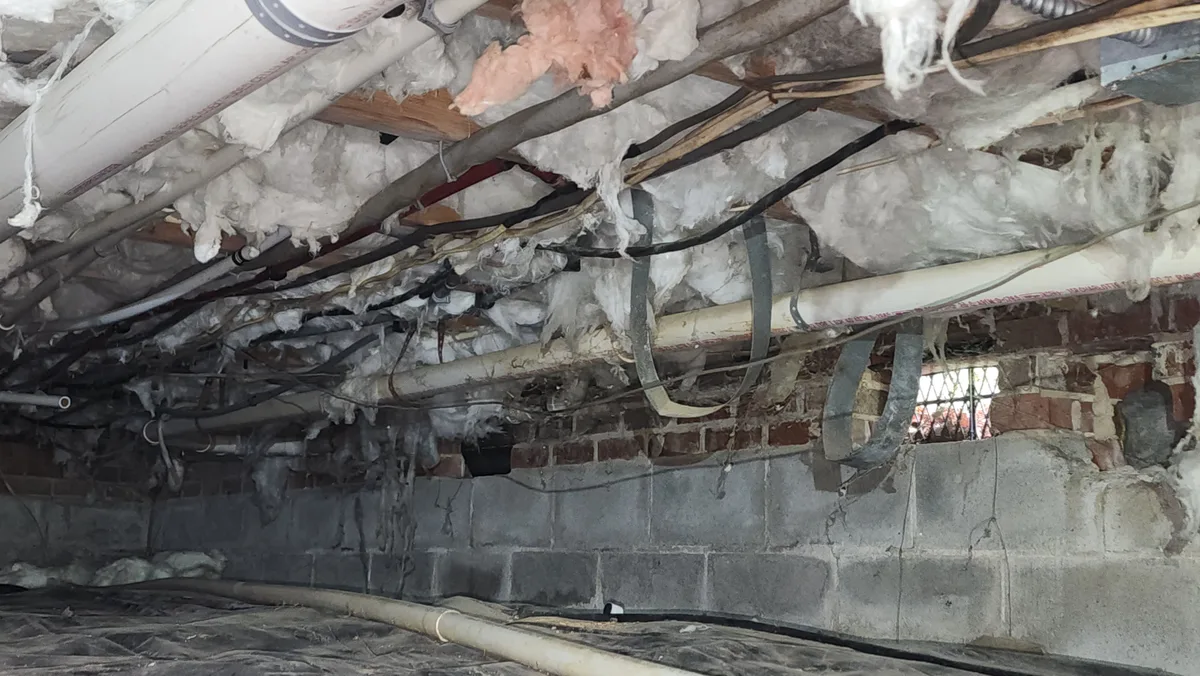
- Insulation sagging or pulling away from floor joists
If two or more of these are present, a crawl space inspection will confirm what’s happening and what it would take to fix.
Frequently Asked Questions
What should crawl space humidity be in summer?
The target is 45–55% relative humidity year-round, including summer. Anything above 60% RH creates conditions where mold can sustain growth on wood framing and floor joists. Vented crawl spaces in the Triangle commonly measure 70–85% RH in July and August without active humidity control in place.
Will closing my crawl space vents fix the humidity problem?
Closing the vents stops the primary moisture pathway (warm humid outdoor air) from entering the crawl space. That's an important first step, but it doesn't eliminate the problem on its own. Ground vapor still rises from the Piedmont clay soil beneath the crawl space, and moisture that's already inside continues to accumulate. A properly sized crawl space dehumidifier is required to actively drive humidity down to the 45–55% target range.
How long does it take a dehumidifier to dry out a crawl space?
A properly sized crawl space dehumidifier typically brings a vented crawl space from 75–80% RH down to the 50–55% range within two to four weeks after vents are closed. Crawl spaces with high ground moisture or an inadequate vapor barrier may take longer. Adding a vapor barrier at the same time as the dehumidifier installation significantly speeds the initial dry-down and reduces the load on the unit long-term.
Does a crawl space dehumidifier fix musty odors?
Yes. Musty odors in crawl spaces are caused by mold and mildew growing at sustained high humidity. Once a dehumidifier holds the space below 55% RH, active mold growth stops and the odor source is cut off. Existing mold on framing may need to be treated separately; see crawl space mold treatment for when professional remediation is warranted. Odors typically clear within a few weeks of consistent low humidity.
Crawl Space Running Too Humid This Summer? Start With an Inspection.
Triangle Dehumidifiers, LLC is a crawl space dehumidifier and moisture control company in Holly Springs, NC, serving Wake County and the broader Triangle region. We'll measure your crawl space humidity on-site, check conditions directly, and give you a clear written quote, no upsells, no scare tactics.
Raleigh, Cary, Apex, Holly Springs, Fuquay-Varina, Garner, Wake Forest, Knightdale, Morrisville, Durham, and Chapel Hill.