Table of Contents
What Actually Causes Mold in a Crawl Space
Crawl space mold needs two things: a food source and sustained moisture. Wood floor joists, subfloor, and even dust provide the food source in almost every home. The moisture usually comes from one of four places: vented outdoor air condensing on cool framing, a missing or damaged vapor barrier letting soil moisture rise, groundwater coming through a foundation crack, or a plumbing leak.
In the Triangle, the first cause does most of the damage. Most homes here still have vented crawl spaces, and from May through September outdoor relative humidity regularly sits around 70%. That air comes straight through the foundation vents.
Why Vented Crawl Spaces Grow Mold Faster in the Triangle
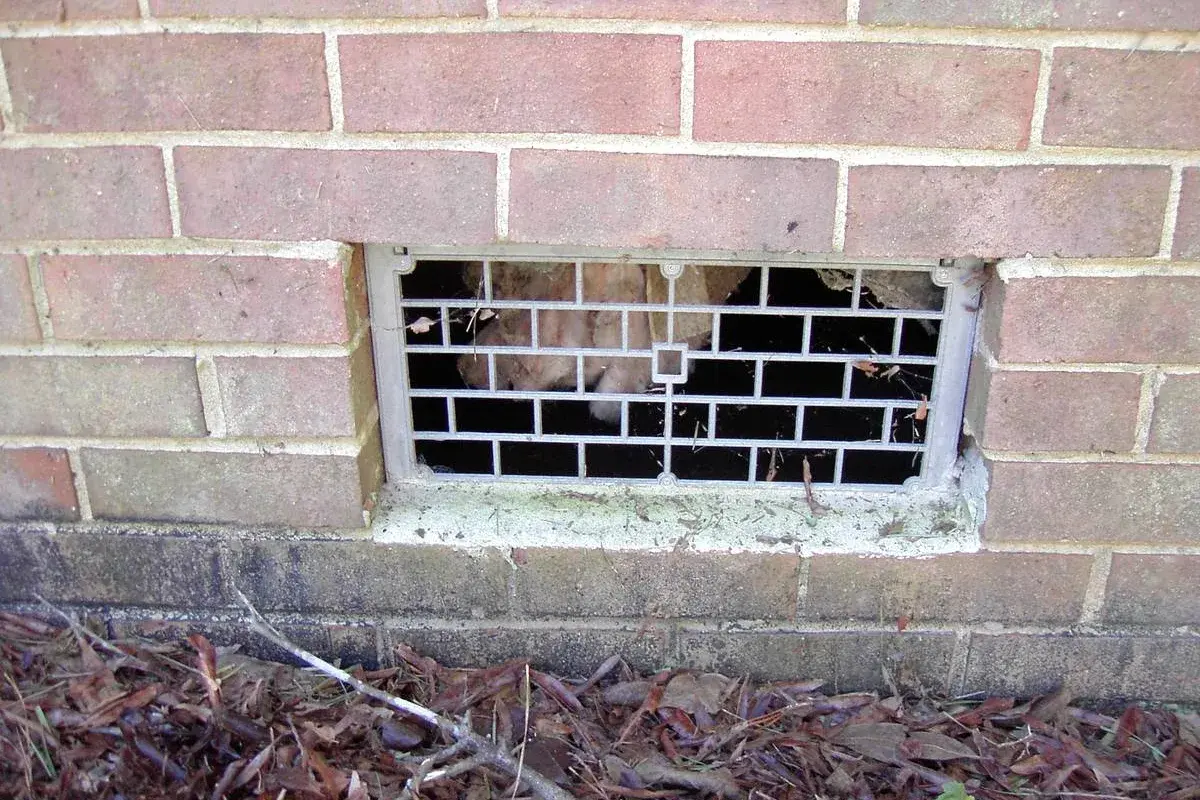
A vented crawl space was built on the assumption that airflow keeps things dry. In a hot, humid climate, it does the opposite.
Warm outdoor air holds a lot of moisture. When it enters a shaded, cooler crawl space through a foundation vent, it cools down against the wood framing and the ductwork. Cooling air can’t hold as much moisture, so the excess condenses right onto the joists, the subfloor, and the insulation. That’s the same physics as a cold glass of tea sweating on a summer porch, just happening under the house instead of on the counter.
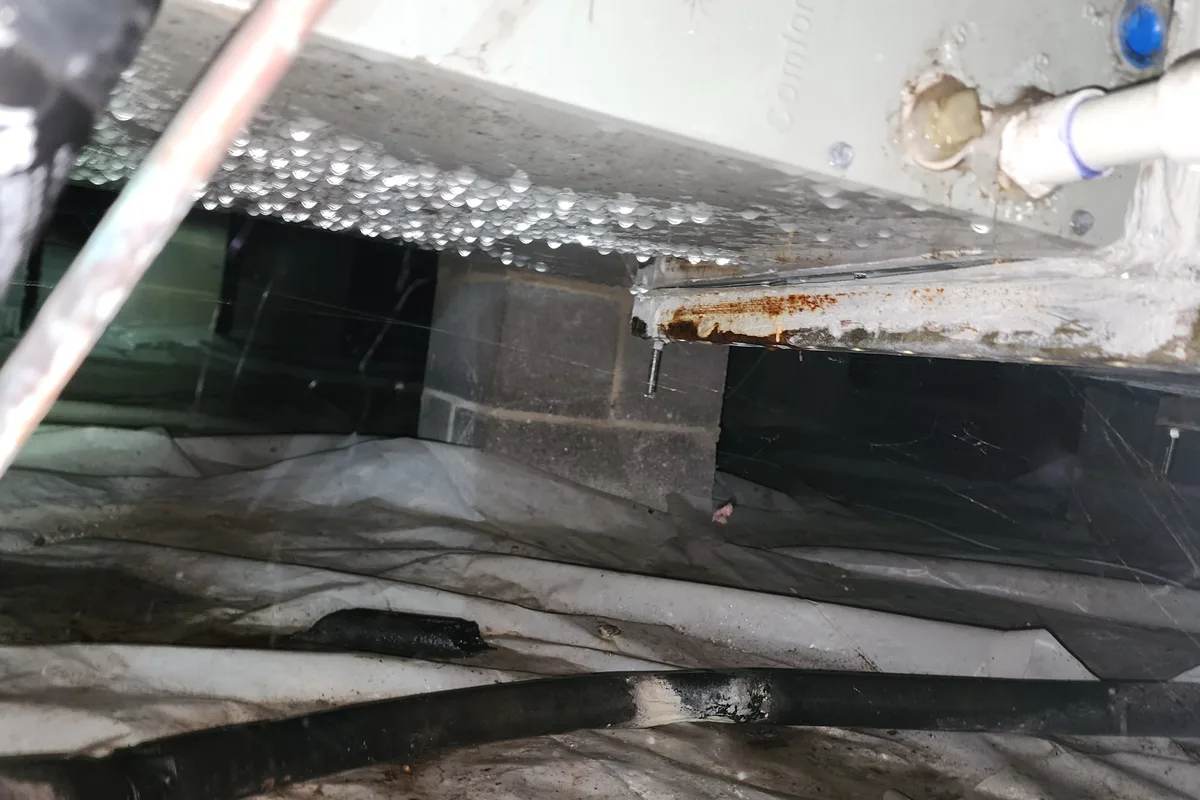
HVAC equipment usually takes the worst of it. A supply plenum or air handler running 55°F air sits in that same humid crawl space air all summer, and metal duct board stays cold enough, long enough, that condensation on it is heavier and steadier than what forms on framing. Triangle Dehumidifiers sees this constantly on inspections: water beading across the entire underside of a plenum and dripping onto the vapor barrier or bare ground below, often for years without the homeowner ever knowing, since the equipment is tucked up against the subfloor where nobody looks. That steady drip keeps duct wrap, nearby insulation, and the framing around the unit wet enough for mold to take hold well before the rest of the crawl space shows a problem.
Piedmont clay soil makes this worse. Clay drains slowly, so after the Triangle’s 43–50 inches of annual rainfall, the ground under a crawl space often stays damp for days. That moisture evaporates upward into the crawl space air, adding to what’s already coming in through the vents.
Other Common Moisture Sources Besides Vented Air
Vented outdoor air is the biggest and steadiest cause, but it’s rarely the only one. Triangle Dehumidifiers commonly finds these alongside it during an inspection:
- Missing or damaged vapor barrier. Bare or exposed soil releases moisture straight into the crawl space air around the clock. A 6-mil vapor barrier (the NC Residential Code minimum, and a basic ground cover rather than a full moisture solution) that has torn, shifted, or was never installed removes that natural lid. For full encapsulation, Triangle Dehumidifiers installs a thicker, reinforced liner rather than code-minimum 6-mil.
- Groundwater through foundation cracks. Piedmont clay holds water at the surface after heavy rain, and that water finds its way through hairline cracks or gaps in the foundation wall.
- Plumbing leaks. A slow drip at a supply line or drain under the house can go unnoticed for months, since most homeowners rarely go under there to check.
- Poor exterior drainage. Gutters that dump water next to the foundation, or grading that slopes toward the house instead of away from it, keep the soil around the crawl space saturated longer than it should be.
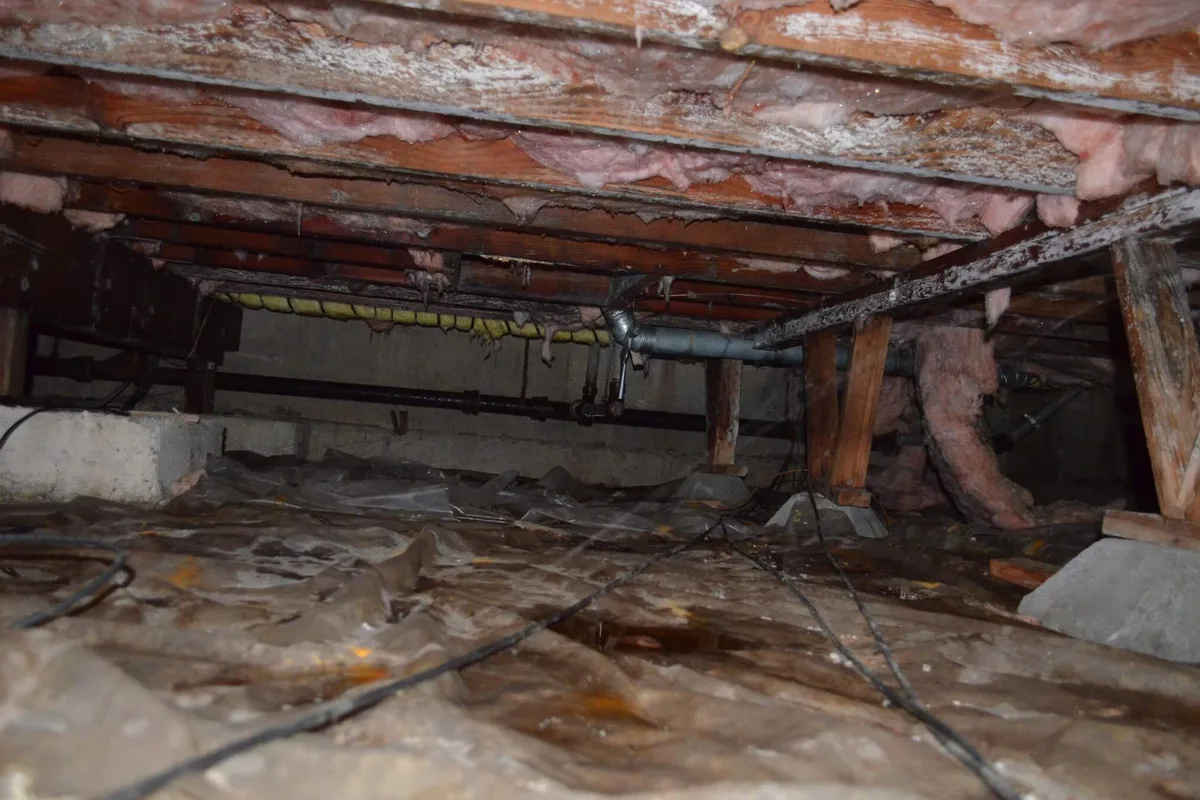
Any one of these on its own can push humidity into mold-risk territory. Combined with vented air during a Triangle summer, they compound fast.
The 65% Threshold: When Humidity Turns Into Mold
Mold spores are present in the air of nearly every crawl space. What determines whether they take hold is how much moisture is available to them over time.
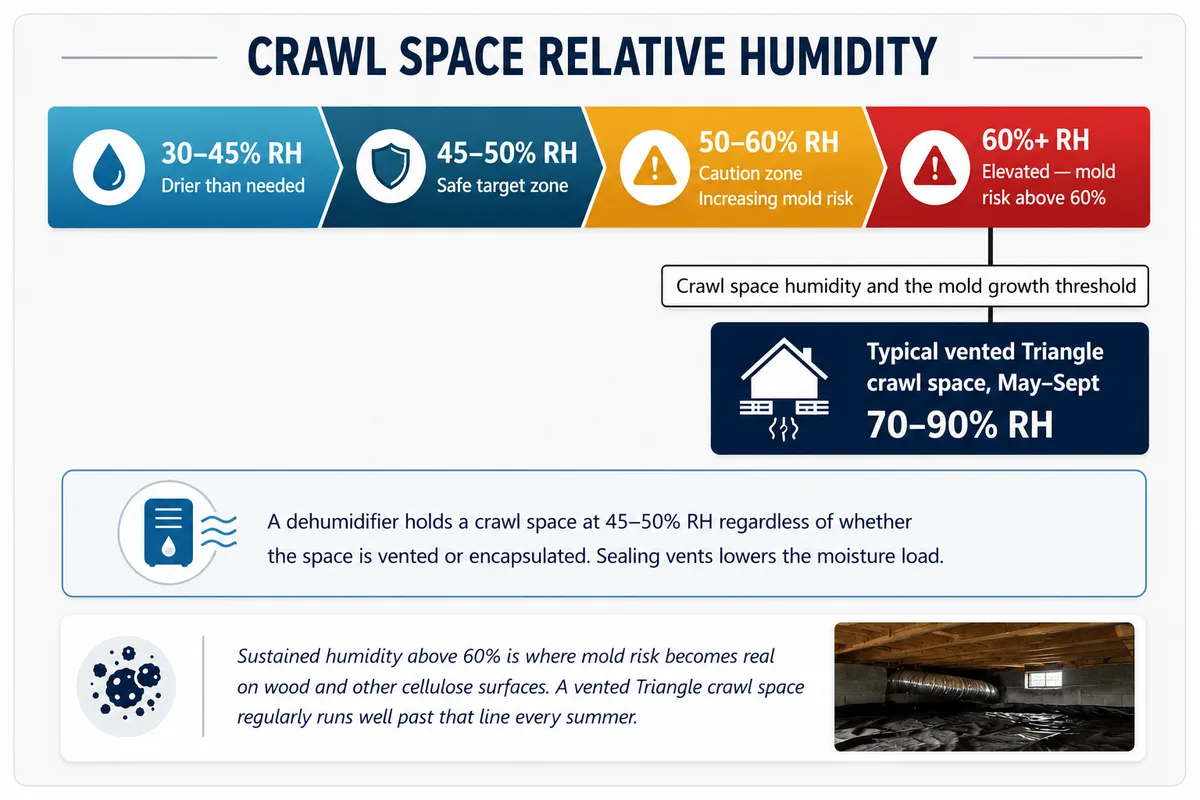
Building science generally treats 65% relative humidity as the line where mold risk on wood and other cellulose materials becomes real, especially when that humidity holds steady for weeks rather than spiking briefly. Below 65%, most surfaces stay dry enough that spores can’t establish. Above it, and especially at the roughly 70% common in a Triangle crawl space all summer, mold on floor joists and subfloor is less a question of “if” than “when.”
That’s why the target for a healthy crawl space isn’t zero humidity. It’s a controlled range, generally 45–55% RH, that’s dry enough to stop mold growth without unnecessarily drying out structural wood.
What Triangle Dehumidifiers Recommends
Once you know where the moisture is coming from, the fix is straightforward. For most Triangle crawl spaces, that means a properly sized crawl space dehumidifier that can hold 45–55% RH regardless of the season.
A dehumidifier can be installed in a vented crawl space or a fully encapsulated one. In a vented space, Triangle Dehumidifiers closes the foundation vents, adds 100% ground vapor barrier coverage, and sizes up to an AprilAire E100W or E130W to handle the higher moisture load. That’s a real, viable fix on its own, and it doesn’t require lining the walls. Our post on installing a dehumidifier without full encapsulation walks through what that setup involves and where its limits are.
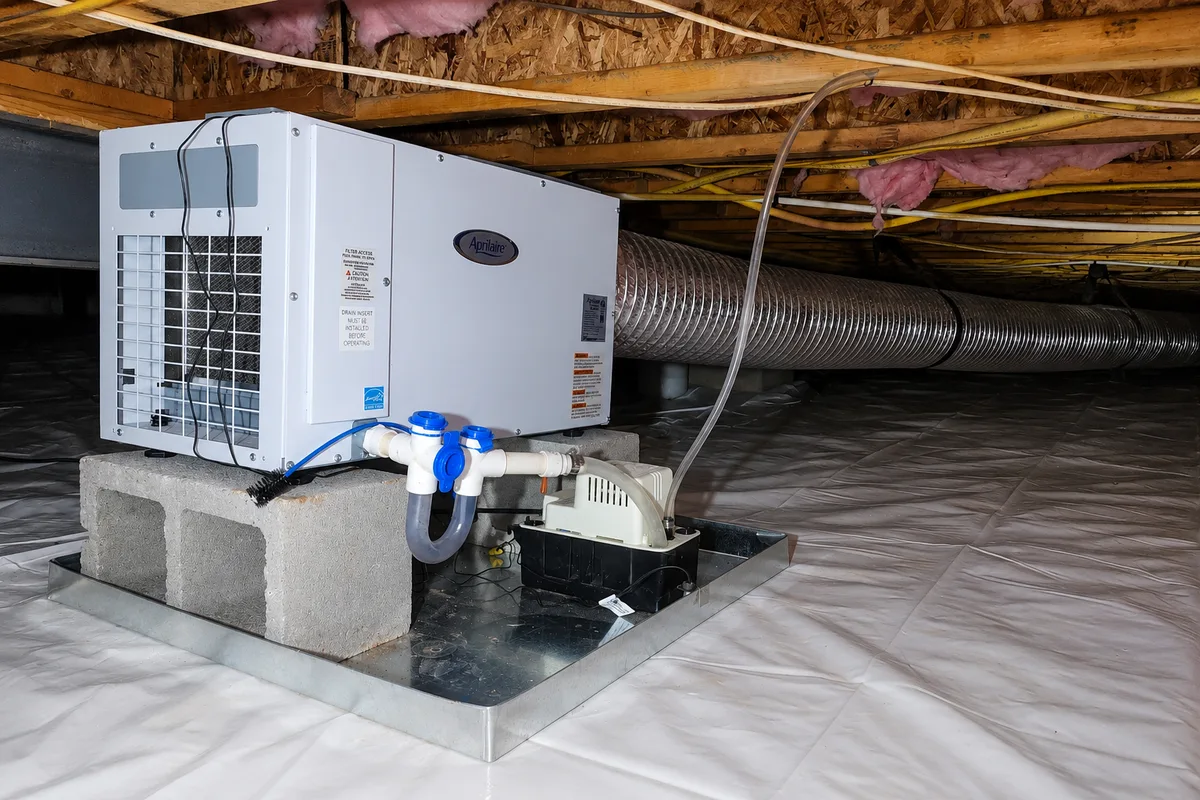
Full crawl space encapsulation, meaning a 100% ground-cover vapor barrier, foundation walls insulated with foil-faced foam board, vents permanently sealed, and gaps around pipes, wires, and other penetrations sealed, cuts the moisture load even further. Full encapsulation with dehumidifier installation included typically runs an estimated $7,500–$15,000 depending on size and current conditions. If mold has already established on framing, that’s a separate step. Crawl space mold treatment typically runs an estimated $1,500–$4,000 depending on severity and square footage. We correct the humidity source first, then perform surface mold remediation using EPA-registered antimicrobial products selected for crawl space applications. It should happen alongside a moisture fix, not instead of one. Treating mold without controlling the humidity that caused it means it comes back.
Signs Your Crawl Space Already Has a Mold Problem
- A musty smell in the house, especially when the HVAC system kicks on
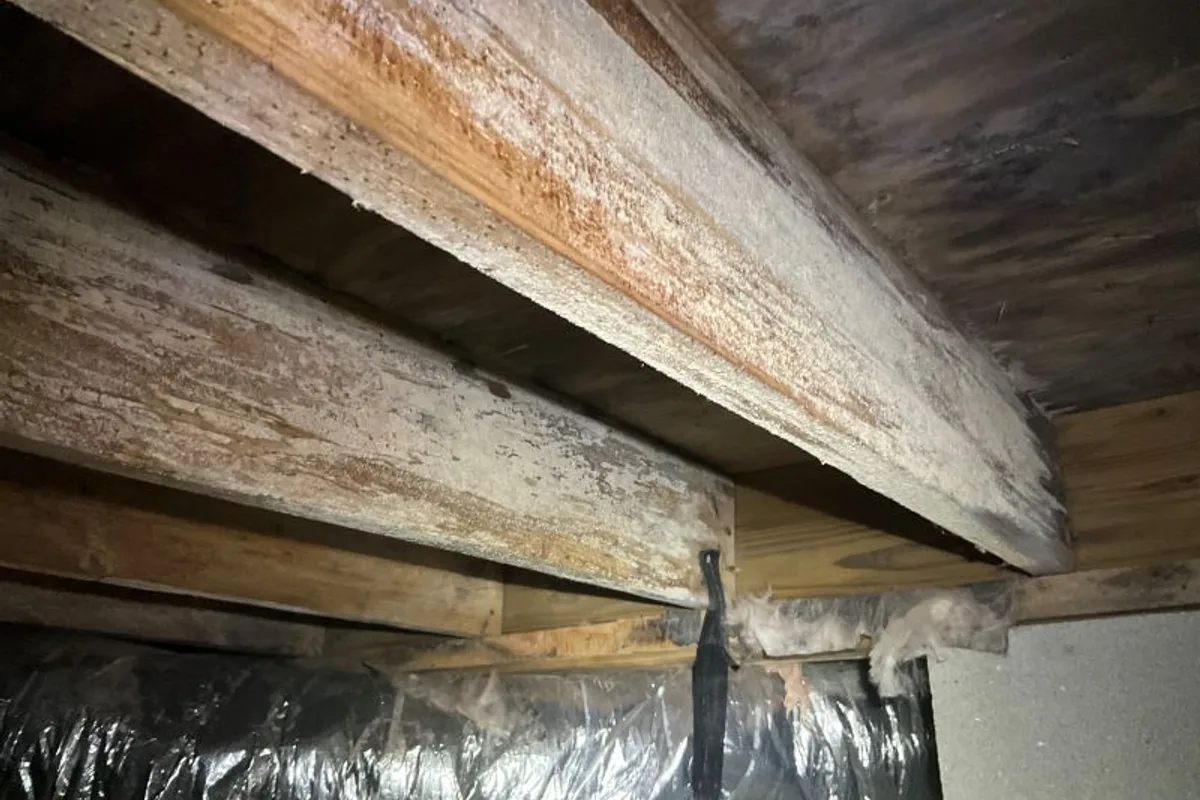
- Visible white, gray, or black patches on floor joists or the subfloor when you look under the house
- Condensation or beaded moisture on ductwork, pipes, or the underside of the subfloor
- A crawl space vapor barrier, if one is present, that looks torn, shifted, or damp underneath
- Allergy symptoms or congestion that seem to ease up when you leave the house
If you’re seeing any of these, a crawl space inspection will tell you the actual humidity reading and where the moisture is coming from before you spend money guessing.
Frequently Asked Questions
What causes mold to grow in a crawl space?
Crawl space mold grows when relative humidity stays above about 65% for an extended stretch, usually from vented outdoor air, a missing or damaged vapor barrier, groundwater coming up through the soil, or a plumbing leak. Wood floor joists and subfloor give mold spores a food source, so mold can establish within a few weeks of sustained humidity above 65% RH.
Can a vented crawl space grow mold without any leak at all?
Yes. In the Triangle, foundation vents let in outdoor air that regularly sits around 70% relative humidity from May through September. When that warm, humid air hits cooler wood framing, it condenses. No pipe has to leak and no water has to enter for mold to start growing on joists and subfloor.
What humidity level causes mold in a crawl space?
Sustained relative humidity above 65% is generally where mold risk becomes real on wood and other cellulose surfaces. The safe working target for a crawl space is 45–55% RH. Below 45% isn't necessary and can dry out structural wood unnecessarily.
Does crawl space mold mean I need full encapsulation?
Not always. A crawl space dehumidifier can control humidity in both vented and encapsulated crawl spaces. Encapsulation adds a sealed vapor barrier and closed vents on top of that, which reduces the moisture load the dehumidifier has to fight. Whether you need it depends on how the space is currently built and how bad the moisture source is.
Find Out What’s Actually Causing the Moisture. Get an Inspection.
Guessing at a mold cause wastes money. An inspection tells you the actual humidity reading, where the moisture is coming from, and whether a dehumidifier alone will fix it or the crawl space needs more.
Triangle Dehumidifiers provides crawl space inspections throughout Wake County and the Triangle. Call or text us at (919) 867-0580 or request your inspection online. We serve Raleigh, Cary, Apex, Holly Springs, Fuquay-Varina, Garner, Wake Forest, Knightdale, Morrisville, Durham, and Chapel Hill.