Table of Contents
What Size Crawl Space Dehumidifier Do You Need?
By mid-May in the Triangle, outdoor relative humidity is already climbing past 70%, and vented crawl spaces are picking up that moisture through every open foundation vent. If you’re shopping for a crawl space dehumidifier and trying to figure out what size you need before calling anyone, this guide explains the logic and which AprilAire unit makes sense for different Triangle homes.
The short answer: sizing comes down to two factors: your crawl space’s square footage and whether the space is vented or sealed. A vented crawl space needs a larger unit because it continuously draws in humid outdoor air. A sealed, encapsulated crawl space needs less capacity because the dehumidifier is managing a fixed air volume.
The Two Variables That Drive Sizing
Pint capacity is how dehumidifier sizing is measured. An 80-pint unit removes up to 80 pints of water per day under rated conditions. In practice, actual output varies with crawl space temperature and current humidity level, so pint ratings are a starting point, not a guarantee. The target is holding the crawl space at 45–50% relative humidity year-round.
Square footage sets the baseline. Whether your crawl is vented or sealed shifts you up or down by one unit class.
Sealed (encapsulated) crawl spaces are managing a controlled air volume. Moisture sources are limited to residual seepage through the liner and minor air infiltration. A 70-pint to 100-pint unit handles most Triangle homes in this category.
Vented crawl spaces pull outdoor air directly through open foundation vents, air that runs 70–90% RH throughout the Triangle’s summer. The dehumidifier works substantially harder. Step up at least one unit class compared to the equivalent sealed space.
The AprilAire Units Triangle Dehumidifiers Installs
Triangle Dehumidifiers, LLC in Holly Springs, NC installs four AprilAire WiFi dehumidifiers: the E070W, E080W, E100W, and E130W. Here’s how they map to the Triangle’s housing stock.
AprilAire E070W (70 pint/day). AprilAire’s purpose-built crawl space unit and our pick for smaller sealed, encapsulated crawl spaces, roughly under 1,000 square feet. The space is managing residual moisture in a controlled environment, not fighting continuous outdoor air infiltration, so the 70-pint capacity is the efficient match.
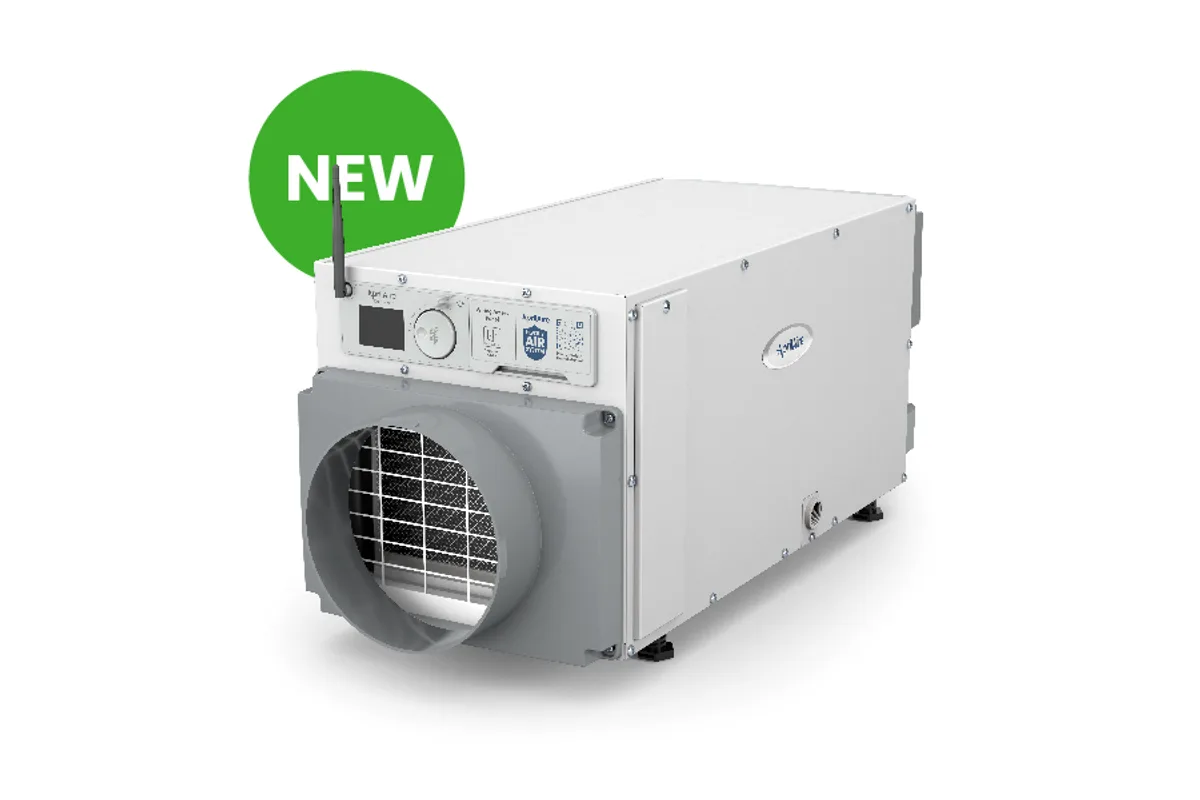
AprilAire E080W (80 pint/day). The right unit for mid-size sealed crawl spaces, roughly 1,000–2,000 square feet, and for smaller vented crawls under about 1,000 square feet when foundation vents are closed as part of the install. Most efficient when the crawl is already tight.
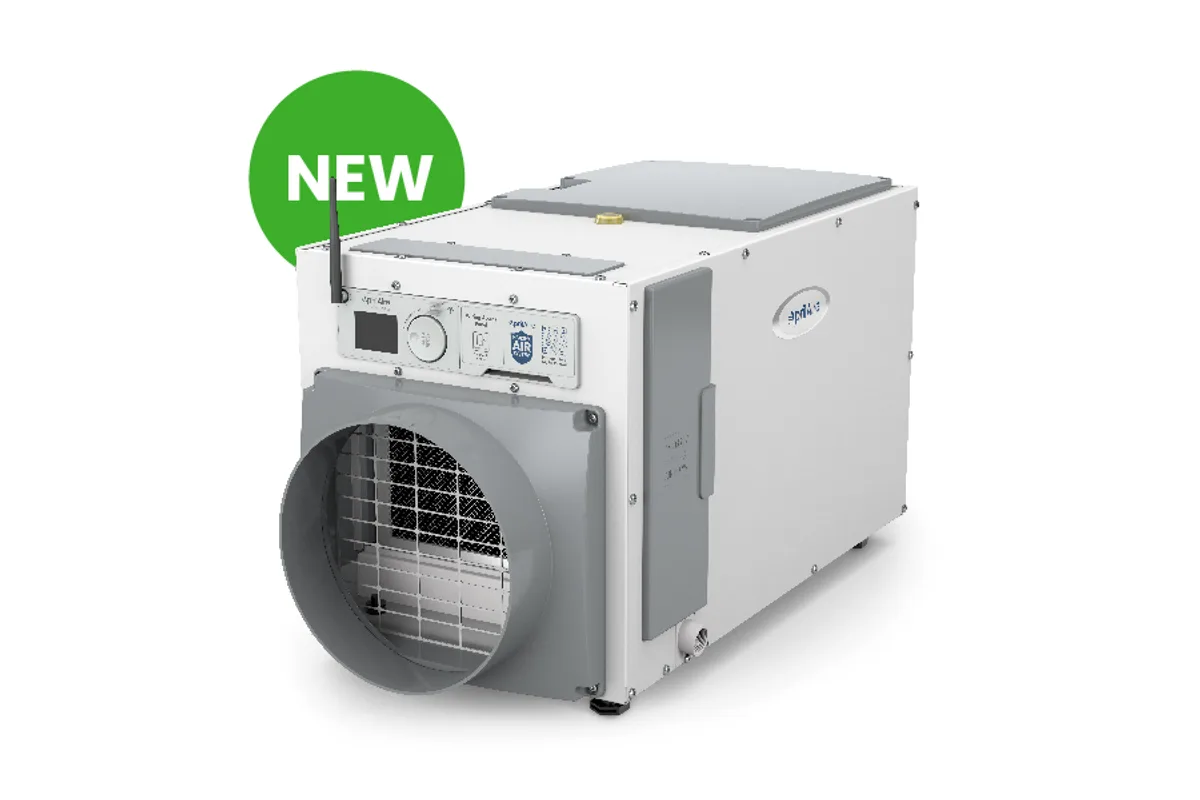
AprilAire E100W (100 pint/day). The most common installation in the Triangle and the workhorse of the lineup. It’s the right call for larger sealed crawl spaces over roughly 2,000 square feet, and for typical vented crawl spaces in the 1,000–2,000 square foot range. Most ranch homes in Apex, Holly Springs, and Fuquay-Varina land here.
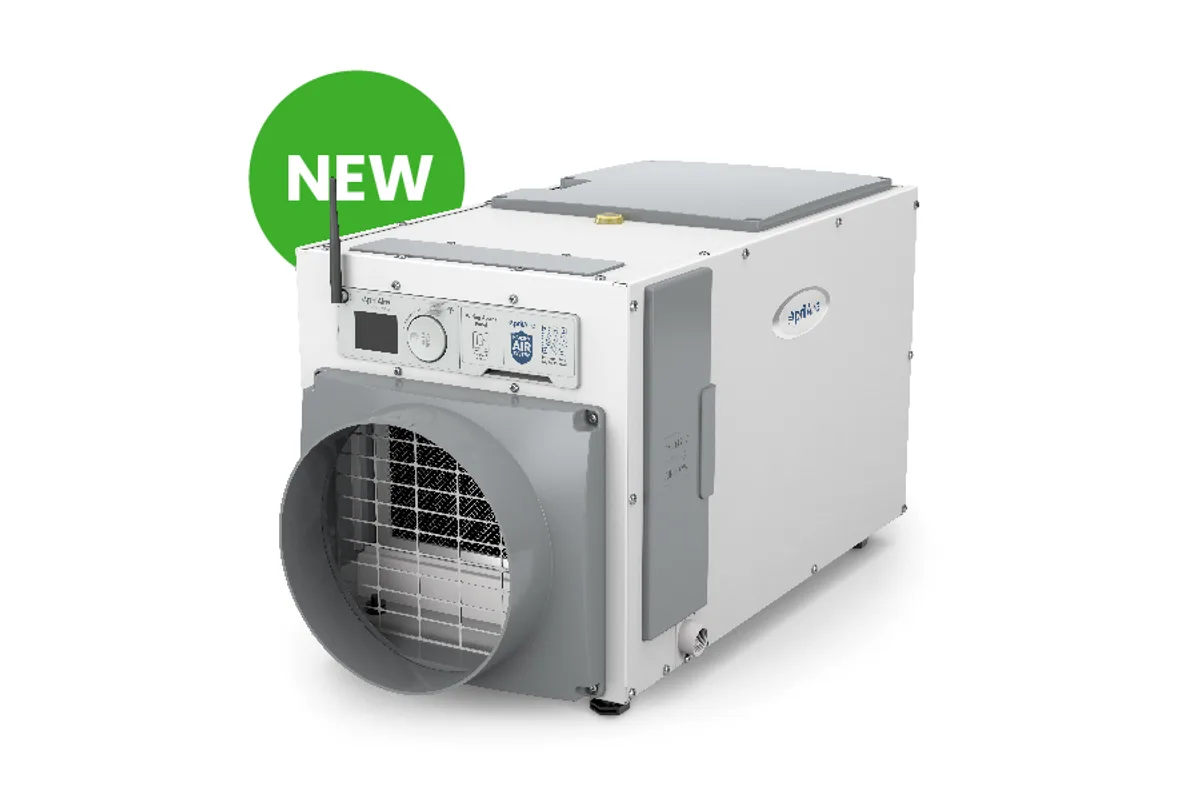
AprilAire E130W (130 pint/day). The high-capacity unit. We reserve it for the larger end: vented crawl spaces over roughly 2,000 square feet, taller crawls with more air volume, or situations where the existing moisture load is severe. It’s not a default upgrade; the space has to be both large and humid to justify it. Some bigger Cary subdivisions from the 1980s and 1990s, with larger footprints, taller clearance, and open vents, are where it earns its place.
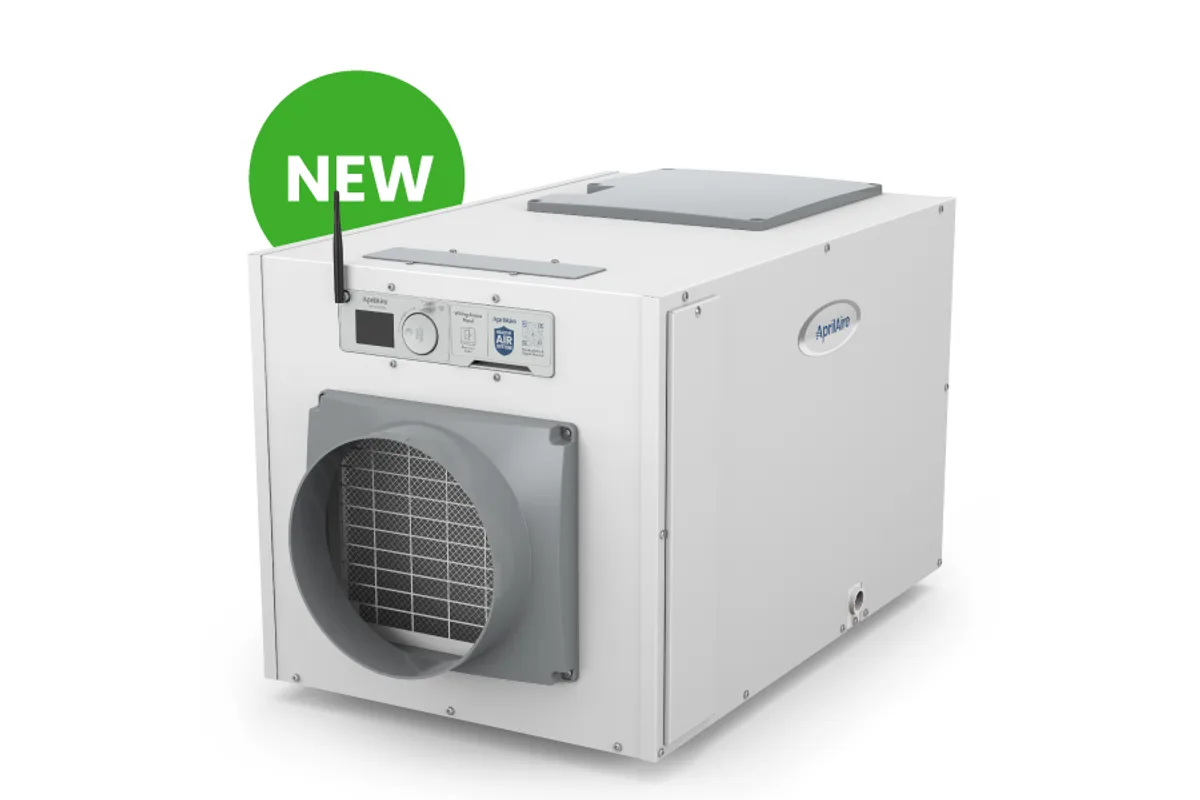
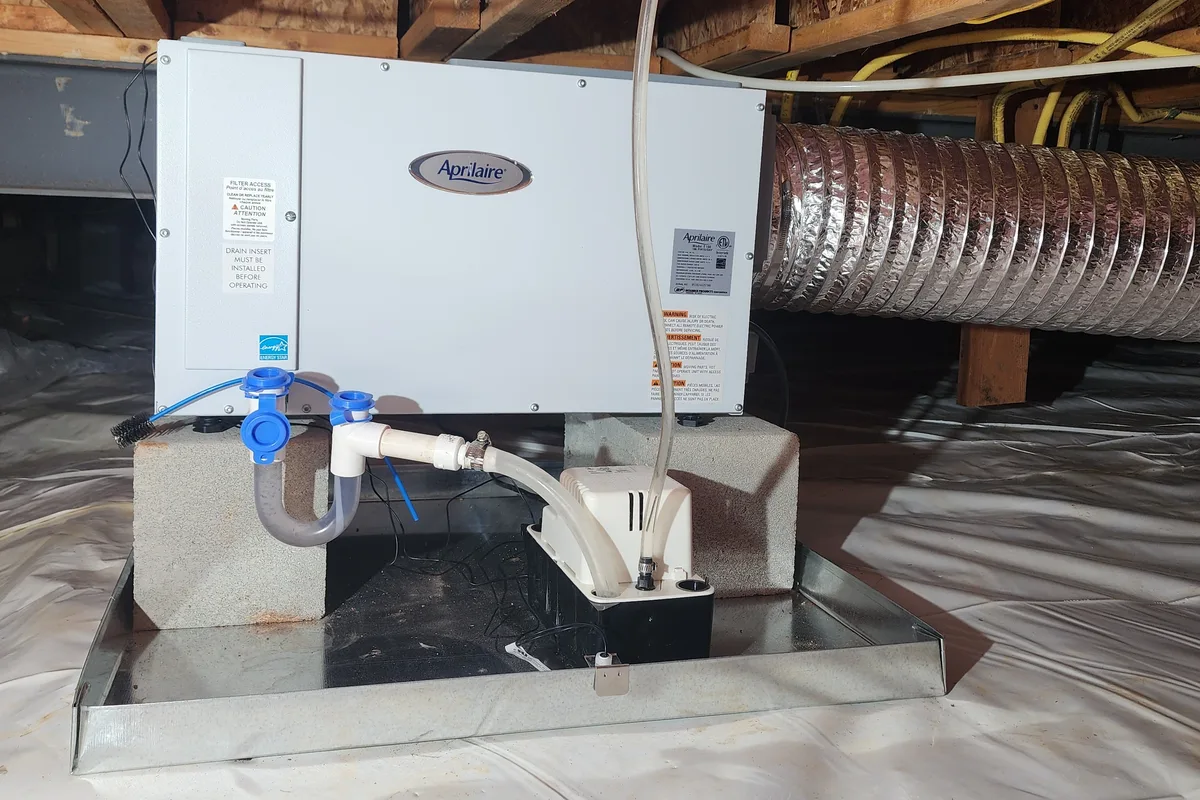
All four models include built-in WiFi for remote monitoring and a continuous condensate drain line, so there’s no collection bucket to empty.
Monitor Your Crawl Space From Your Phone
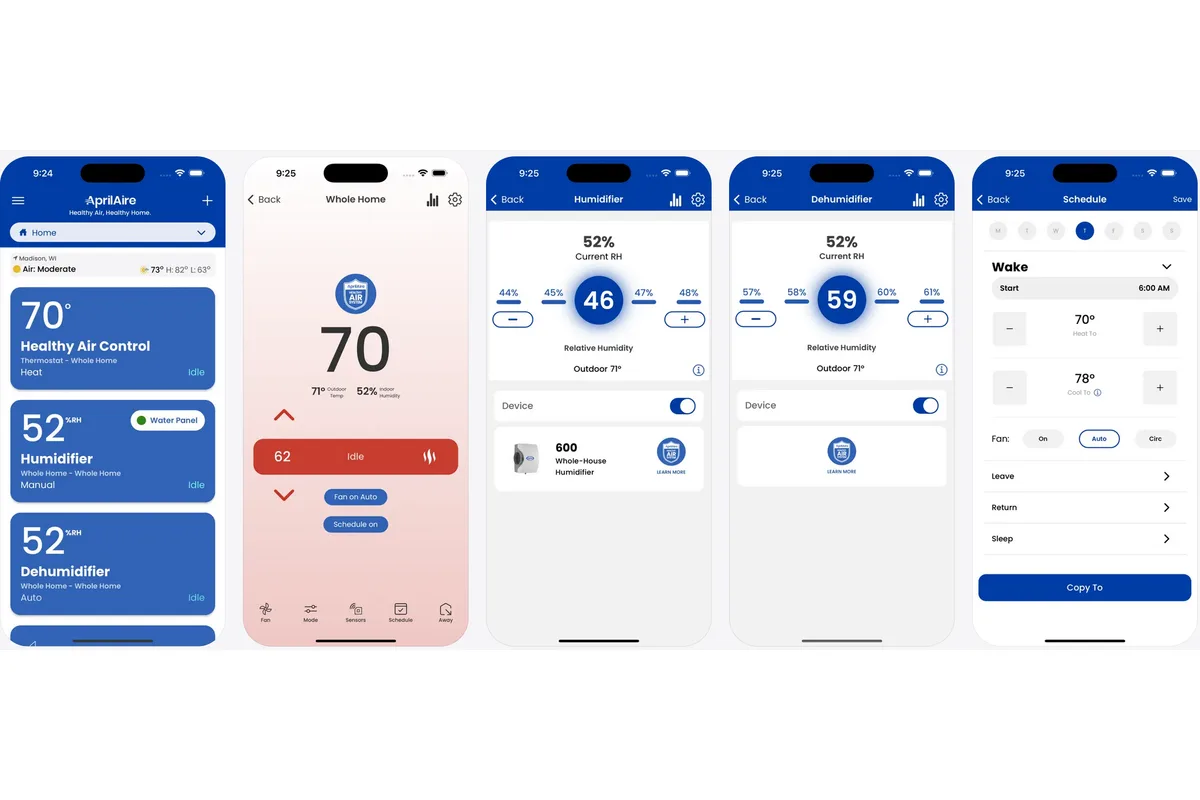
Because every “W” model is WiFi-equipped, each one pairs with the free AprilAire Healthy Air app (iOS and Android). For a crawl space you almost never climb into, that remote visibility is the whole point. You can see what’s happening under the house without opening a vent door.
From the app you can:
- Check current crawl space humidity at a glance, from anywhere: the live relative-humidity reading the unit sees.
- Adjust the target humidity without going into the crawl space.
- Get alerts when humidity drifts out of range or the unit flags a problem, so you know the moment it stops keeping up, even when you’re away from home.
- Confirm status (running or idle) right from the home screen.
- Manage several AprilAire devices from one account, if you also run an AprilAire thermostat, humidifier, or fresh-air control elsewhere in the house.
For a crawl space dehumidifier, the alerts matter most. A unit that quietly stops holding 50% RH can let moisture build for weeks before anyone notices it down there. App notifications close that gap.
What Pushes You Toward a Larger Unit
Square footage and crawl type are the primary sizing variables, but several conditions consistently push toward the next unit class up.
Tall crawl space. A 3-foot crawl holds 50% more air volume than a 2-foot crawl at the same square footage. That extra volume holds more moisture and takes more capacity to control.
Partitioned crawl space. Foundation walls added during an addition or renovation can block airflow between sections. One unit may not effectively service the whole space without repositioning or adding a second unit for the isolated section.
Heavy existing moisture load. If floor joists show surface mold or the block walls show efflorescence, the space is well above target humidity. A larger unit recovers faster and reaches a stable setpoint sooner.
No vapor barrier. Bare soil releases substantially more moisture into the crawl air than ground cover does. If you’re adding only a dehumidifier and skipping the vapor barrier, size up. A basic ground cover at roughly $1 per square foot reduces the moisture load enough to meaningfully affect unit sizing and longevity.
What Happens If You Undersize
An undersized unit runs continuously without reaching target humidity. At 60% RH or above, mold can establish on crawl space wood framing within a few weeks during the Triangle’s summer. The unit also wears out faster because it never cycles off.
The most common mistake is using a portable residential dehumidifier, a 30- or 40-pint consumer unit, in a crawl space. These aren’t rated for crawl space temperatures, they require manual bucket emptying, and 40 pints of daily capacity disappears quickly when outdoor air at 80% RH is flowing through open foundation vents.
A purpose-built, properly sized unit with continuous drainage is the right tool. For a full breakdown of what installation runs in the Triangle, see the crawl space dehumidifier cost guide.
Frequently Asked Questions
What size dehumidifier do I need for a 1,500 square foot crawl space?
A 1,500 square foot vented crawl space in the Triangle typically needs the AprilAire E100W, a 100-pint unit. If the space is already encapsulated with a vapor barrier, the E080W at 80 pints may be enough. The right answer depends on crawl space height, existing moisture load, and soil conditions, which is why Triangle Dehumidifiers offers a free inspection before quoting.
Is it better to oversize a crawl space dehumidifier?
Slightly oversizing is better than undersizing. A unit that's too small runs continuously without reaching 45–50% RH. A slightly oversized unit hits the target faster and cycles off, which is normal. A significantly oversized unit costs more upfront for capacity you won't use. Sizing right is the goal, which is why the free inspection matters.
Do I need to encapsulate my crawl space before installing a dehumidifier?
No. Triangle Dehumidifiers installs dehumidifiers in vented crawl spaces regularly. A vented space needs more capacity, usually the E100W, because it draws outdoor air at 70–90% RH through open foundation vents. The larger E130W is reserved for big crawl spaces that are also very humid. Whether encapsulation makes sense first depends on your crawl space conditions, moisture load, and long-term goals. The encapsulation vs. dehumidifier comparison covers both options.
How much does crawl space dehumidifier installation cost in the Triangle?
Installation typically runs $3,000–$4,000 for an encapsulated crawl space and $3,000–$5,000 for a vented crawl space where foundation vents are closed as part of the work. Actual cost depends on crawl size, unit selection, and drainage setup. See the full dehumidifier cost guide for what affects the quote.
Get the Right Size. Free Inspection, Written Quote.
Sizing math gets you close. An on-site inspection gets it right. Triangle Dehumidifiers measures square footage, checks current humidity levels, assesses crawl space height and drainage options, and gives you a written quote for the unit that actually fits, before any work begins.
A crawl space dehumidifier installed at the right size should run reliably for 10–15 years. It’s worth confirming the sizing before the install.
Triangle Dehumidifiers, LLC provides free crawl space inspections throughout Wake County and the Triangle. No pressure, no upsells.
Call or text us at (919) 867-0580, or request your free inspection online. We serve Raleigh, Cary, Apex, Holly Springs, Fuquay-Varina, Garner, Wake Forest, Knightdale, Morrisville, Durham, and Chapel Hill.